Tree removal · Tyler, Texas
Before the saw starts, we find out whether the tree has to come down.
An assessment first, an honest recommendation second, and a remote-controlled crane for the trees too dangerous to climb.
Many calls start at "it has to come out", and the tree gets a vote
People often call us assuming a full removal is the only answer, and sometimes it is. Before we say so, our team takes the time to assess each situation and gives a recommendation tailored to the tree's condition and to what stands around it. The estimate is free, and the answer might be that the tree stays.
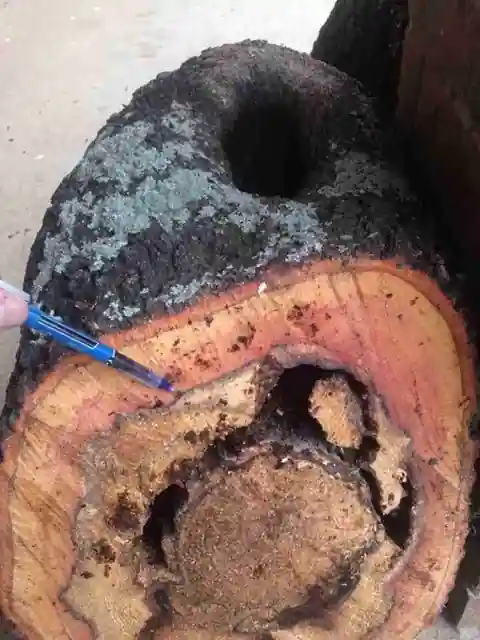
The assessment is a walk around and a look up. We check the base for fungal growth and lifted soil, the trunk for cracks, cavities and included bark, the crown for dead wood and thin foliage, and the lean against whatever it could hit. When the outside will not tell, a probe into a cut round traces the cavity inside, which is what the photo on this page shows.
Plenty of trees leave that walk still standing. A dead limb takes deadwooding, an overgrown crown takes reduction, and a declining tree goes to plant health care or a plant pathology lab test through our ISA Certified Arborist. When the answer is removal, you hear exactly why.
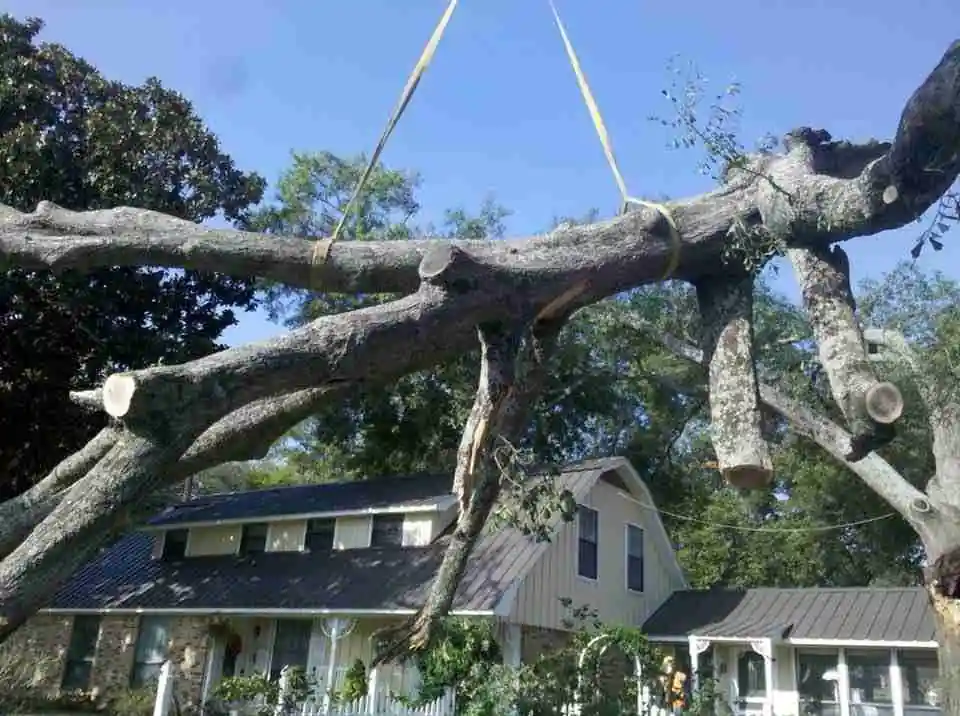
An Artmire's crew rigging a wide oak limb on two slings over a white house
The remote-controlled crane, for trees nobody should climb
Some trees are too dangerous to put a climber in: dead, rotted through at the trunk, cracked by a storm, or leaning over a house. For those we do hazardous tree removals with a remote-controlled crane, which keeps climbers from ascending a hazardous tree and keeps the risk to people and property as low as the job allows.
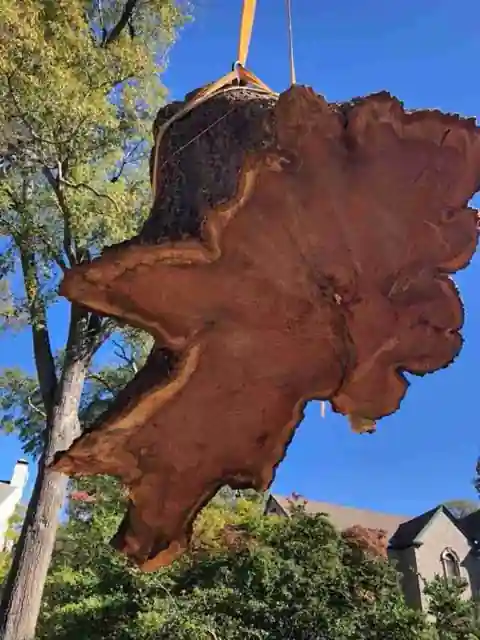
The order of work matters. The crane takes the weight first. A sling is set on the section, the line is loaded, and only then is the cut made, so the piece hangs instead of dropping. The operator runs the boom from a remote and swings the section clear of roof, fence and wires. Big trunks come down in rounds, the way the red-hearted oak round in the photo below hangs from the hook.
Where a crane cannot reach, a bucket truck and climbers do the work with rigging and a lowering line. Either way the crew works to avoid ruts in the lawn and damage to beds, hardscape and sprinklers.
All types and sizes, then the stump and the wood
We remove trees of all types and sizes: the pine on the lot line, the pecan that outgrew the yard, the oak dropping limbs over a driveway. Cleanup is part of the job, so limbs, sawdust and trunk sections are gone when the crew is.
Stump grinding can be added to any removal. The grinders take the stump 6 to 12 inches below ground, and we haul the chips or leave them for your garden, with topsoil or seed on request for a smooth finish. The details are on the stump grinding page.
The wood gets a second life: logs and chips from our work feed the hardwood mulch and firewood we sell from the Tyler yard. If the tree meant something to the family, say so on the visit. Customers have told us the arborist helped them choose what to plant in its place. Once you accept the quote we can be on site within two days. Questions go to (903) 581-4766.
Family owned in Tyler since 1995, with an ISA Certified Arborist on staff. Fully insured: professional liability and workers' compensation.
Keep or remove, as the arborist rules
- Keep
- Dead wood confined to branches, a sound trunk and root flare, a defect that deadwooding, reduction or treatment can manage
- Remove
- Hollow or decayed trunk, lifted root plate, storm-split main stem, a lean over a structure that cannot be corrected
- Crane
- Hazardous trees that no climber should ascend, lifted out in sections
- Added
- Stump grinding 6 to 12 inches below grade, cleanup, mulch or firewood
DeterminationISA Certified Arborist