Sheet III · Storm damage & emergency removal
When disaster strikes, we answer at any hour
Storms, floods and fires leave trees that look fine and are not. We assess the damage, take the hazards down, save what can be saved and document it all for your claim.
Reading a storm-hit tree before anyone cuts it
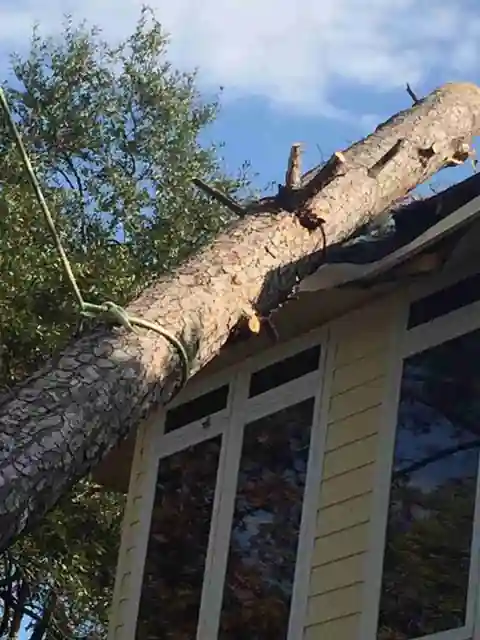
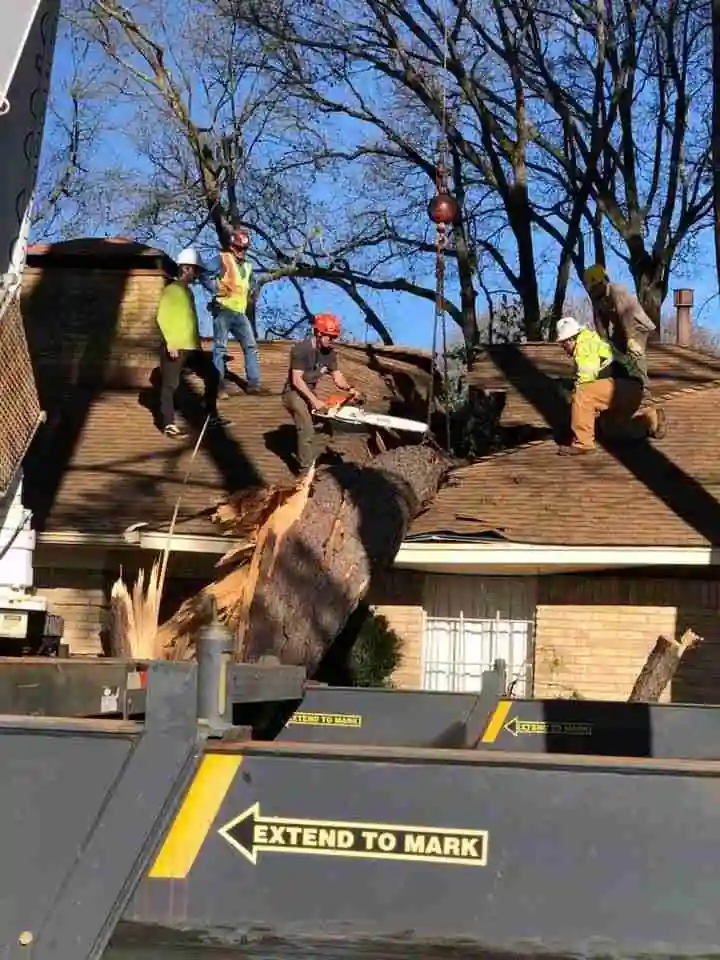
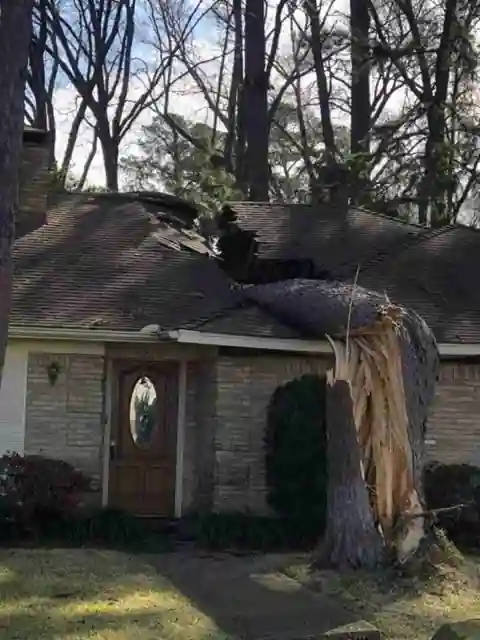
A tree that has come down on a roof, or is leaning on one, is holding a load. Limbs pinned against a house, a fence or another trunk can spring the moment they are cut, so the first job is to work out what is bearing on what and in which order the pieces can safely come off.
Not all storm damage is visible from the yard. A trunk can be cracked under the bark, a root plate can be loosened before the lawn shows a heave, and a fork can be split out of sight. Our assessment looks for structural weakness, root damage and the hidden risks behind the next failure.
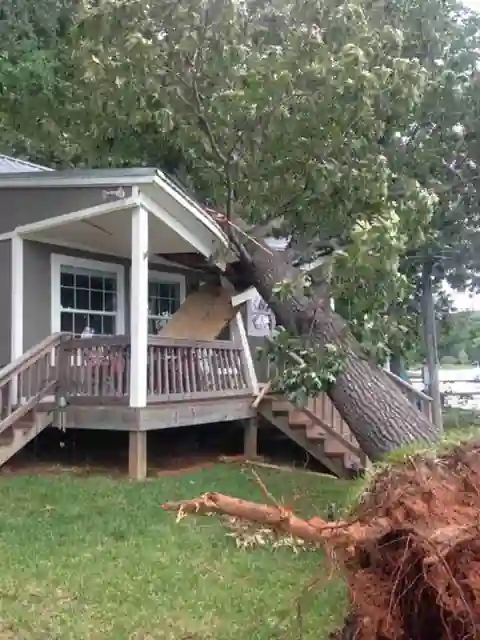
An uprooted tree lying against a small porch house, its root plate torn out of the lawn
A brace for the tree that can be saved
Plenty of damaged trees are worth keeping. When the damage is partial, we prune out the broken branches and, where the structure needs help, install cabling or bracing to support the tree while it recovers.
Cables tie limbs together above a weak union so wind cannot pull them apart, and bracing holds a split closed. Neither is a promise for every tree, and when the sound wood left is too thin for the size of the tree, removal is the honest answer.
Where a tree is too unsound to climb, the remote-controlled crane takes it down in sections, so nobody has to go up a tree that may not hold.
Clean ground, a paper trail, and trees to replace what was lost
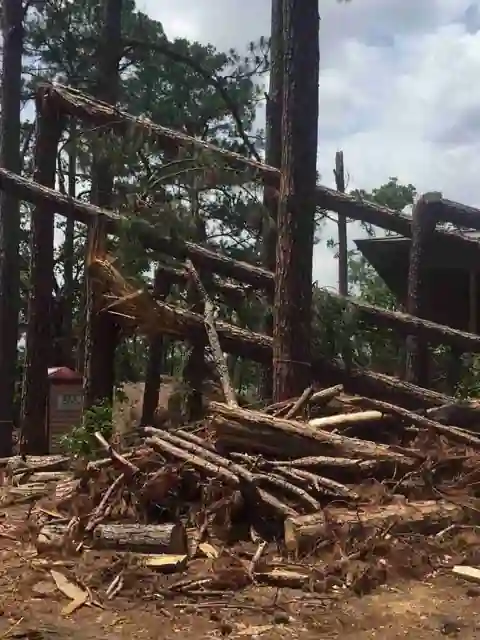
Once the wood is down we clear the fallen limbs and trees and haul the debris, so the property is left clean and secure and the rebuild can start.
Where trees are lost, we replant with resilient, storm-tolerant species, so the yard recovers instead of just emptying out.
For your insurance claim we write up detailed reports and photographic evidence of the tree damage. Damage is easiest to show in photographs taken before the wood is cut up and hauled away, so documentation belongs at the start of the job, not the end.
Artmire's answers storm calls 24/7 and carries professional liability and workers' compensation insurance. Call (903) 581-4766.
Six determinations for a storm-hit tree.
What we do after a disaster, entered the way our arborist files a specimen: one label, six entries.
- Hazard
- Emergency Tree RemovalDangerous or fallen trees put people, homes and businesses at risk. We take hazardous trees and limbs off so the property is safe again.
- Hidden
- Storm Damage AssessmentA look for structural weakness, root damage and hidden risks, so a tree that looks fine does not fail next month.
- Savable
- Tree Pruning and StabilizationBroken branches pruned out, with cabling or bracing to support a damaged tree that can still be saved.
- Aftermath
- Debris Clearing and Site Clean-UpFallen limbs, trees and debris hauled away, leaving the property clean, secure and ready for recovery.
- Rebuild
- Replanting and Landscape RestorationReplanting with resilient, storm-tolerant species where trees were lost.
- Claim
- Insurance Documentation SupportDetailed reports and photographic evidence of tree damage, to support insurance claims and speed up recovery.
Det. · ISA Certified ArboristOpen 24 hours